
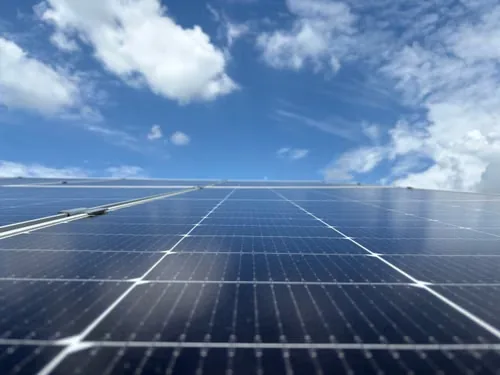
Out here, dust isn’t an occasional nuisance — it’s a season. Caliche roads, cotton harvest, spring pollen, and the occasional full-blown haboob all leave a film on your array, and that film blocks sunlight exactly like a dimmer switch.
What soiling actually costs
Studies in arid climates consistently find soiling losses of 3–7% per month between rains. In the Concho Valley — where meaningful rain can skip entire seasons — neglected arrays commonly run 15–25% below their clean output. On a system offsetting $180 a month, that’s $27–$45 quietly evaporating every month you wait.
Why rain doesn’t fix it
Rain helps in wet climates because it arrives regularly and sheets off clean panels. Here, a light shower mostly converts dust into mud streaks that bake on at 103°F. And garden-hose water in Tom Green County is hard enough to leave mineral spotting that shades cells and resists the next rinse — which is why professional cleaning uses deionized water.
How often should you clean?
- Standard suburban arrays: once or twice a year — after spring pollen/dust season and again after summer.
- Near dirt roads, fields, or gin yards: quarterly is money well spent.
- After a major dust storm: check your monitoring app; if production dipped and clear-sky days confirm it, book a wash.
What a proper cleaning includes
Deionized, spot-free water; soft brushes (never pressure washers or abrasives that void warranties); safe roof access; and a visual once-over of glass, wiring, and mounts while the crew is up there. Before/after production numbers from your monitoring app tell you exactly what the cleaning recovered — it’s usually the cheapest performance upgrade your system will ever get.
Questions about your roof?
Get a no-obligation quote from a vetted local pro.